Before design, there is soil. It holds memory, receives what is returned, and reminds us that nothing truly disappears, it only changes form. Solk is built on this understanding. Founded by David Solk and Irmi Kreuzer, the brand begins where most products end: with the question of what happens after we are done wearing them.
In this conversation, the founders speak about soil as teacher, design as responsibility, and why the future of luxury may lie not in what we keep forever, but in what we let go of gracefully.
How did the idea for Solk first take shape, and what gap in the footwear or sustainability landscape did you want to address?
Solk started with a question from our daughter: “Where do sneakers go when people throw them away?” After decades in footwear, and helping put tens of millions of pairs of shoes into the world, we realised how effectively our industry avoids that question. Most sneakers are built from complex, mixed materials designed to last, but without any consideration for end-of-life.
We didn’t want to create “another sustainable sneaker.” We wanted to skip to the end, to create a premium shoe people genuinely want to wear, that also happens to be engineered to be ultimately harmless at the end of its life. Beautiful in its first life, generous in its second.
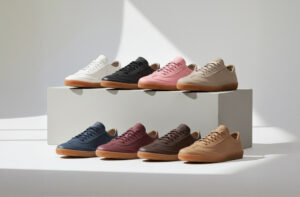
“Biocircularity” is central to your identity. How do you define it in practical terms, and what differentiates it from sustainability as it’s often understood?
Classically styled, incredibly comfortable, premium sneakers are central to our identity. For us, biocircularity is a practical design rule: every material and component must be chosen so that, once the shoe is worn out, it can safely return to a biological cycle.
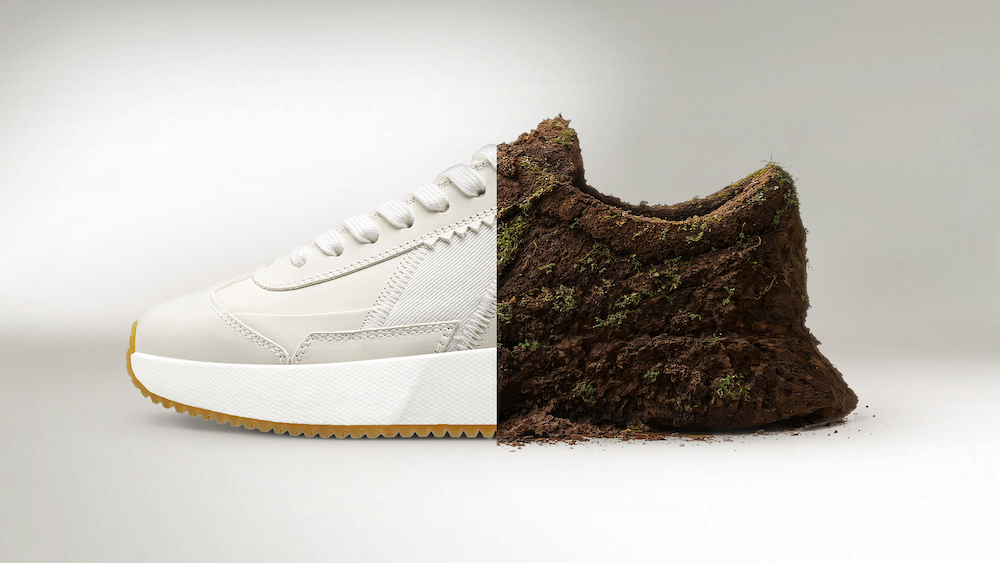
That means no mystery chemistry, no shortcuts, and no components we cannot stand behind. Where “sustainability” is often used as a broad or abstract label, biocircularity forces a clear end-of-life outcome. Our approach combines material selection, controlled production, and a take-back pathway, so the product is designed to fade into compost, not sit in landfill.
What were some of the biggest challenges in setting up your own factory in Vietnam, and what have you learned from having full control over production?
We first worked in Vietnam with adidas, where we opened their first office in Ho Chi Minh City (Saigon) 30 years ago. We’ve also had our own operations and company there for over 20 years, so we’re very familiar with the country and fortunate to have an exceptional team on the ground.
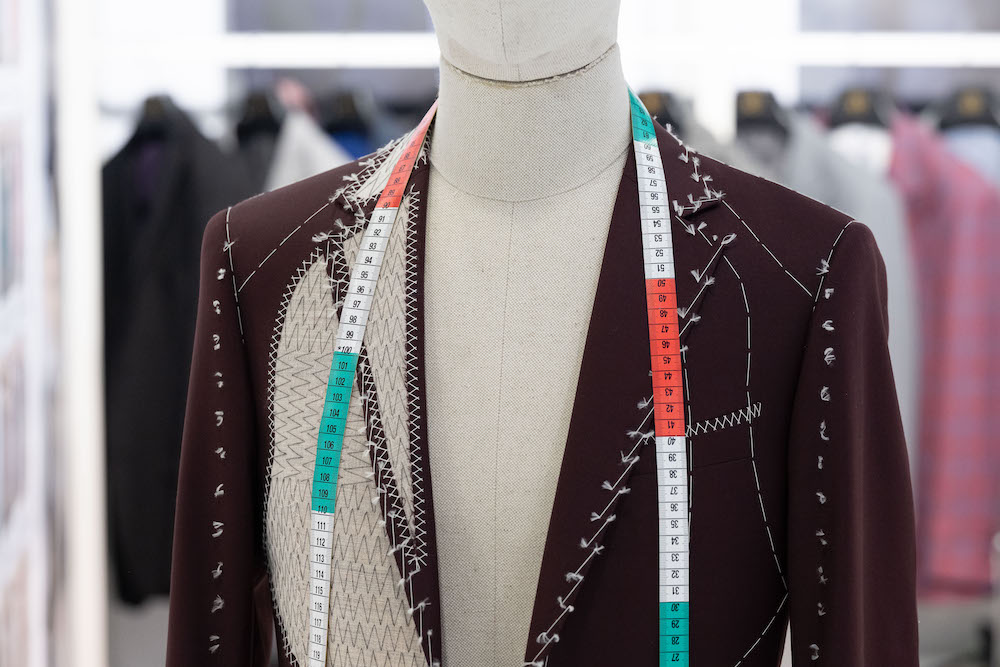
Building a factory around biocircular constraints is very different from building one around speed and cost. Many standard components and processes in footwear exist because they’re convenient, not because they’re clean. We had to rework parts of the supply chain, tooling, and even very small components to ensure material integrity from end to end.
The biggest learning is simple: if you want responsibility, you need control. Owning production allows us to verify what goes into the shoe, reduce waste at source, and maintain our standards, especially as growth typically pressures brands to compromise.
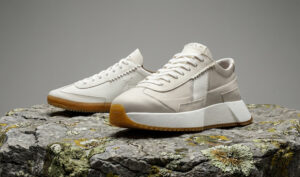
The Fade 201 represents a new phase for Solk. What design considerations guided this model, and how does it build on the foundation of the Fade 101?
The Fade 101 proved that a biocircular sneaker can feel timeless and premium. With the Fade 201, we evolved both the silhouette and the wearing experience. We aimed for a closer-to-the-ground feel, a more refined profile, and a full leather lining that becomes increasingly personal with wear.
It’s still Made to Fade, designed to age beautifully, then return safely at end of life. The Fade 101, the Fade 201, and the new models coming next year show that biocircularity doesn’t limit design. It can elevate it.
What does the direct-to-consumer webshop allow you to do differently, both in how you communicate with customers and how you manage your products’ lifecycle?
Direct-to-consumer is not just a sales channel for us, it’s how a lifecycle model becomes real. It allows us to communicate directly and transparently about materials, production, and the return process, without dilution.
Operationally, it helps us forecast demand more accurately and avoid overproduction. Most importantly, it keeps the relationship open at the end of the first life: we can guide customers back into the take-back loop, so a worn-out pair doesn’t become waste by default. DTC helps us build a system, not just a brand.
Can you share more about the development of your compost-capable leather and how that technology integrates into the overall biocircular system?
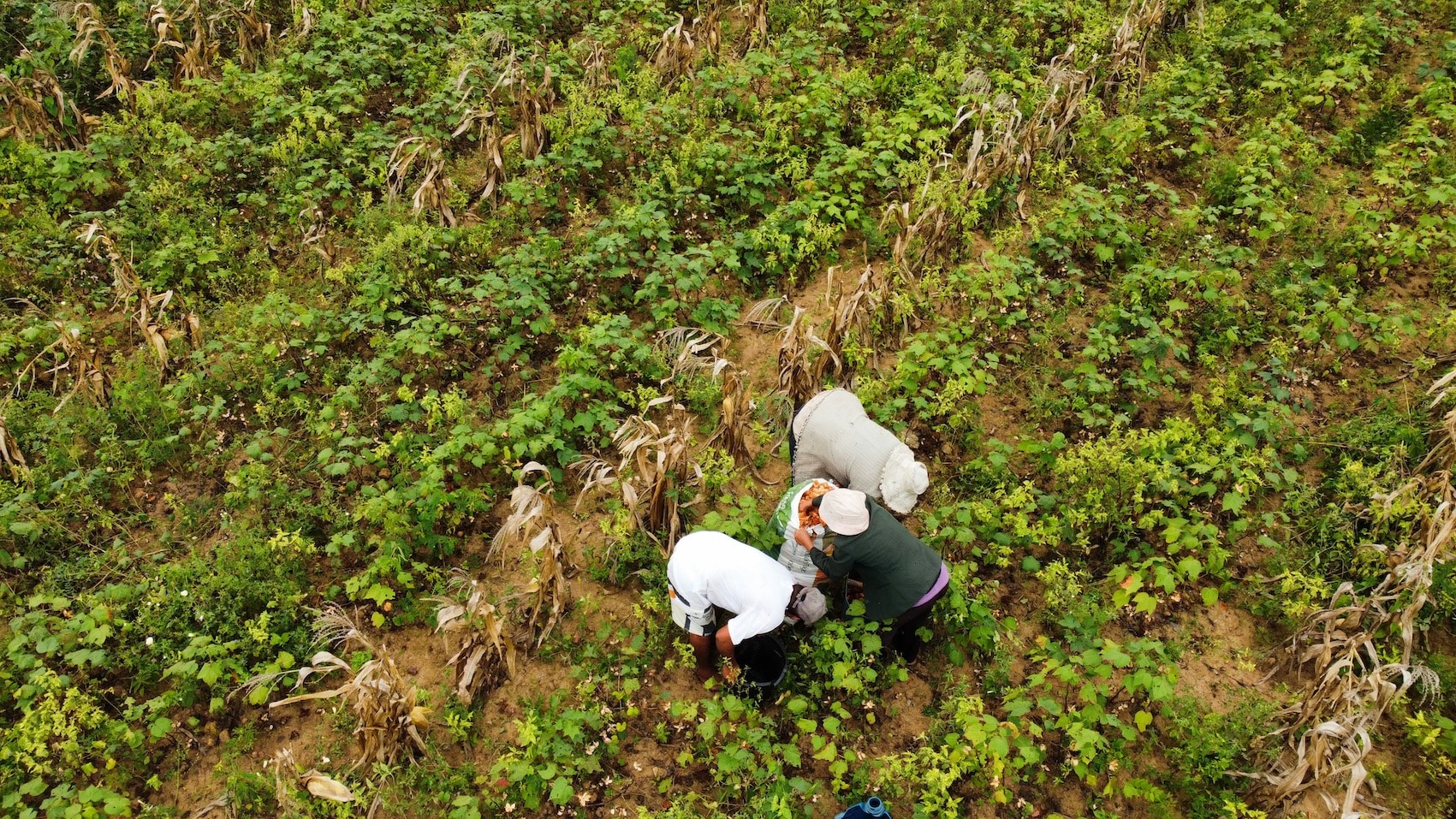
Leather was our most difficult decision, and our most important one. We tested many alternatives, but none matched leather for durability, comfort, and breathability over years of wear. The challenge is that conventional tanning is designed to resist decomposition.
We worked with a specialist, family-owned tannery in Germany to develop a chrome-free, heavy-metal-free tanning process that keeps the leather premium in use, yet allows it to break down under controlled composting conditions. In lab testing we commissioned, the leather showed strong biodegradation within weeks.
It’s one part of a complete system: the upper, lining, foam, and rubber are designed to compost together, not as separated parts.
The fashion industry often struggles to balance scale with transparency. How do you maintain ethical consistency as you grow?
We have two simple ground rules that every Solk product must meet: it must be desirable, and it must be ultimately harmless. If we stay true to that baseline, transparency follows naturally, because every product must remain biocircular, regardless of scale.
Owning our factory helps enormously. We don’t outsource responsibility; we live with the consequences of every decision. We also keep our model intentionally focused: direct-to-consumer, controlled distribution, and a product range that expands only when we can prove the same standard. Scale should amplify what’s right, not dilute it.
How does AI-driven cutting and the use of repurposed machinery change the traditional manufacturing process?
To make biocircular footwear properly, waste reduction and component control are essential. AI-assisted cutting allows us to map each leather hide, identify usable zones, and optimise pattern placement, reducing offcuts and improving consistency.
Across machinery, materials, and processes, we’ve adapted everything to guarantee compost capability. Footwear is full of “small parts” that become big problems at end of life. Rethinking and repurposing is how we close those gaps, so the product isn’t just designed to compost on paper, but engineered to compost in reality.
You mention “end-of-life solutions” as part of your design process. What does that look like in practice, and how do customers participate?
End-of-life is written into our design brief. The goal is simple: if a Solk is truly worn out, it should not become a long-term pollutant.
Customers return their worn pairs through our take-back pathway. We then mechanically shred the shoes and blend the material with organic matter to support microbial breakdown. From there, the mix goes through controlled composting until it becomes usable soil. The customer’s role is straightforward: wear them, care for them, then send them back when they’re done. We take responsibility for the rest.
There’s increasing public interest in products that reconnect people with nature and origin. How do you see Solk contributing to that cultural shift?
We think, and hope, people are tired of abstraction: labels without substance, “green” claims without a clear outcome. Solk brings the conversation back to materials, craft, and consequence.
When something is made from honest inputs, you can feel it. The leather breathes, the shoe ages, the story becomes tangible. And when the shoe is finished, the end is no longer a landfill guess, it’s a return pathway. Our hope is that “ultimately harmless” becomes the expectation, not a niche exception.
Many creative movements today are rediscovering ancestral or elemental values. Do you see parallels with Solk’s biocircular philosophy?
Yes. Nature has always been circular: nothing is wasted, everything becomes something else. Biocircularity isn’t about inventing a new idea, it’s about applying an old truth with modern engineering.
We combine traditional materials and craft with a strict chemical standard and controlled production, so the product can return safely to the biological cycle. In that sense, SOLK sits between heritage and future: making something beautiful and functional, then allowing it to go back to where it came from.
Looking ahead, what are you most excited about for 2026?
In 2026, we’re focused on proving the model at a larger scale. That means broadening our product range, refining product costs, strengthening the take-back loop, and expanding our material library, always to the same compost-capable standards.
We’re also excited about carefully chosen collaborations, not for hype, but to bring more people into the Made to Fademindset and to pressure-test the system in new contexts. Our goal isn’t to be the only biocircular brand. We’re happy to be a catalyst, helping make “ultimately harmless” the baseline.
Partner content
Words : Anne-Sophie Castro
Photos : Solk
More articles about ethical pieces in our magazine